In L2 Bonding and Structure, there would always be a question on solids. Identifying what type of solids are necessary.
In this standard, there are 4 types of solids that can come out:
- Covalent Network
- Ionic
- Molecular
- Metallic
To identify by just looking at the formulas, look at what type of atoms/molecules/ions there are.
If there are only metals, then it’s straight up metallic solid.
If it’s a metal + non-metal, then it’s straight up ionic solid.
It works differently for non-metals only — you need additional information. Very common information given in the exam is the melting point (“MP”). If it has a VERY HIGH MP, then it’s a covalent network solid, and if it has a VERY LOW MP, then it’s a molecular solid.
If you aren’t given the MP, then you rely on their structure — how it bonds to one another, and whether if it can continuously bond, or not.
First, draw the lewis structure for the molecule.
From here, my explanation gets quite intense, but it works. If someone has a better explanation, PLEASE contact me 😭.
Then, we should know how many ‘bonds’ the molecule can have, to achieve a full octet. This can be calculated by using this formula:
For instance, for oxygen , it can have 2 bonds to achieve a full octet:
Likewise, chlorine can have 1 bonds, since .
Now, look at the lewis structure you’ve drawn.
I’m going to use as an example:
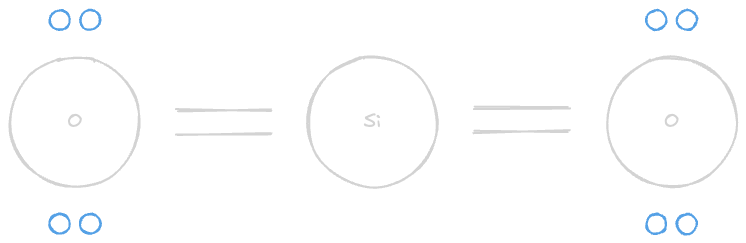
Count how many bonds , and can have. If the number of bonds in the lewis diagram doesn’t match the number of possible bonds (that you calculated), then it’s pretty likely a covalent network, since that means that the structure can infinitely expand like this to achieve its full octet WITH FULL POSSIBLE BONDS:
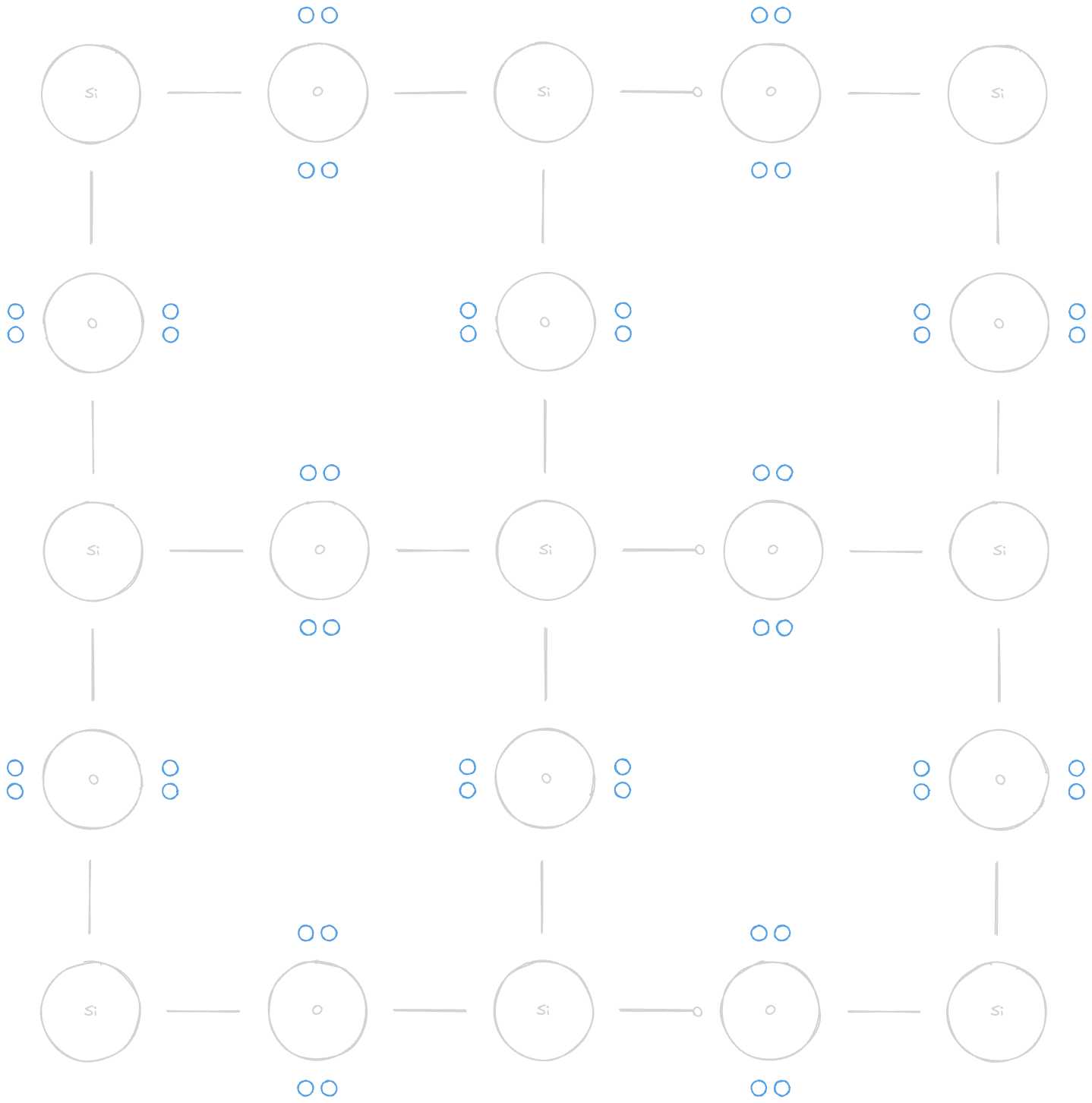
See that expanded lewis diagram? That’s a lattice, which is known to be super hard to break, which implies that it’s a covalent network solid.
On the other hand, take as an example. It’s lewis structure probably looks like this:
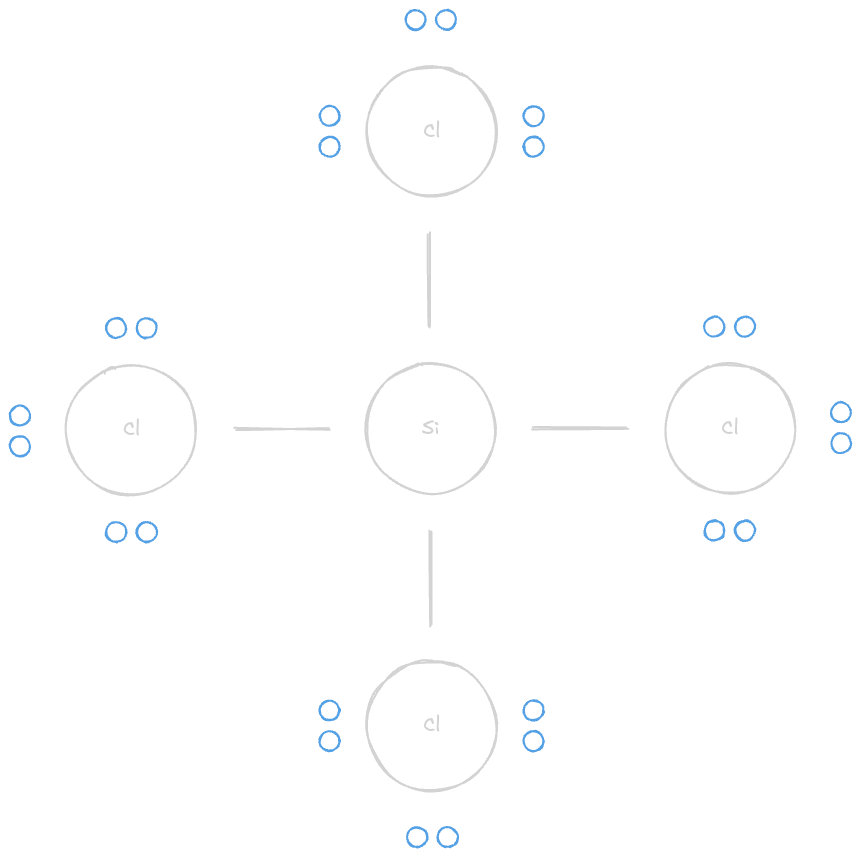
Now, compare the bond count in the lewis structure to the possible bond counts (calculated from the formula). can have 1 possible bond, and can have 4 possible bonds. This matches the lewis diagram’s bond count, which means that the lewis diagram can’t expand like the example. This means that the molecule stops here. Since it doesn’t expand, it is a molecular solid!
Summary
Metals only? Metallic Solid
Metal + Non-metal? Ionic Solid
Non-metals only? Count possible bonds, and compare it to the bonds in the lewis diagram!
if bond count = possible bond count Molecular Solid
if bond count possible bond count Covalent Network Solid